BlogAug 20, 20266 min read
We analyzed 1,176 LinkedIn white paper ads. Here are 5 takeaways.
The copy patterns from every white paper ad running on LinkedIn right now: 1,176 ads, 249 companies, 383 unique headlines, and the five fixes that follow from them.

Prashant Rohilla
Founder, magnetchat
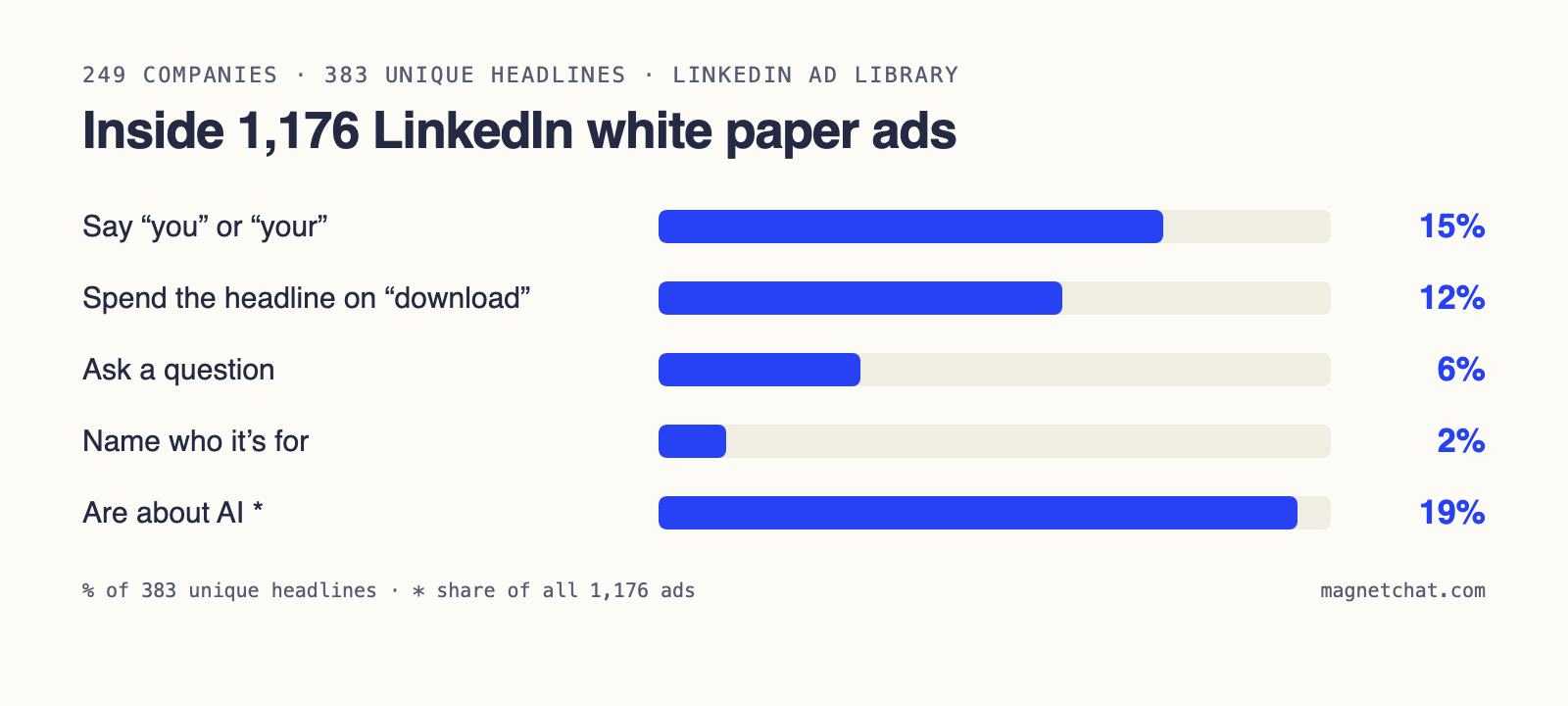
TL;DR: 249 companies are running 1,176 white paper ads on LinkedIn right now. We analyzed all of them. Only 6% of unique headlines ask a question, 15% address the reader as "you", 12% spend the headline on the word "download", 2% name who the document is for, and a full fifth are about AI. Five fixes follow, none of which need a bigger budget. And underneath all five sits the pattern no ad copy fixes: every dollar aims at the download, and nothing attends the reading that happens two days later.
LinkedIn's Ad Library is public. Anyone can search it. We searched it for white paper campaigns and read everything that came back: 1,176 ads from 249 companies, live right now, containing 383 unique headlines once you collapse the variants.
We did it because companies gating content behind forms are exactly who magnetchat is built for, so we wanted to know what their campaigns actually look like. But most of what we found is useful to anyone spending money on gated content, so here it is: five patterns, each with the fix the data suggests.
1. Only 6% of headlines ask a question
22 of 383 unique headlines. Everyone else announces.
The questions were the best copy in the set. "Do You Actually Have an Affordability Problem?" "Still auditing just 3-5% of your claims?" "Is Your Team Ready for Global SBOM Compliance?" Each one forces the scroller to answer in their head, and whoever answers yes, or worse, "I don't know", has qualified themselves before the click. The announcement headlines do none of that work. They just describe the PDF.
The fix: make your headline the question your white paper answers. Not a rhetorical one, a real one your buyer would recognize from their own week.
2. Only 15% say "you" or "your"
The rest talk about the company, the product, or the report itself. Which means 85% of these ads open with the one subject the scroller cares least about.
The fix: your buyer is the subject, not your PDF. Rewrite the headline so the reader is in the sentence.
3. 12% spend the headline on the word "download"
At least 20 ads run "Download the Whitepaper" as their entire headline. Think about what that costs: the most visible line in the ad, the one the feed shows before any click, spent on describing the button underneath it.
The fix: the CTA handles how to get the document. The headline's only job is why it is worth reading.
4. Only 2% name who it's for
"How CMOs and CTOs Are Preparing for AI" was one of the few headlines in the set that names its audience, and it does two jobs at once: it stops exactly the right scroller and waves the wrong ones past. On a cost-per-click channel, the second job is worth as much as the first.
The fix: put your persona's title in the copy. You are paying per click either way; naming the audience means paying for the right ones.
5. One in five white papers is about AI
222 of 1,176 ads. Every industry, same topic, and mostly the same promise: what AI means for X, how leaders are preparing for Y.
If your white paper is about AI, your competition is not your rival vendors. It is 221 other documents in the same feed saying roughly the same thing.
The fix: lead with the claim or number only you can make. Your original data, your customer's measured result, your unpopular position. Anything that cannot be copy-pasted into a competitor's ad.
The five fixes at a glance
| Pattern in the data | The fix |
|---|---|
| 6% of headlines ask a question | Make the headline the question your white paper answers |
| 15% say "you" or "your" | Put the buyer in the sentence, not the PDF |
| 12% spend the headline on "download" | Headline says why it matters, the button says how to get it |
| 2% name who it's for | Put your persona's title in the copy |
| 1 in 5 is about AI | Lead with the claim only you can make |
The pattern no ad copy fixes
Reading 1,176 ads back to back makes one thing impossible to miss: all of this effort, budget, and creativity points at a single moment, the download. And the download is the moment when nothing has happened yet.
The moment that matters comes about two days later, when the lead actually opens the document. That is when the questions show up: does this apply to my team, what would this cost, how does this compare to what we do today. Every one of those questions is buying intent, and in every funnel behind these 1,176 ads, they have nowhere to go. The PDF talks at the reader, the SDR called before there was anything to talk about, and the nurture email lands after the reading has passed.
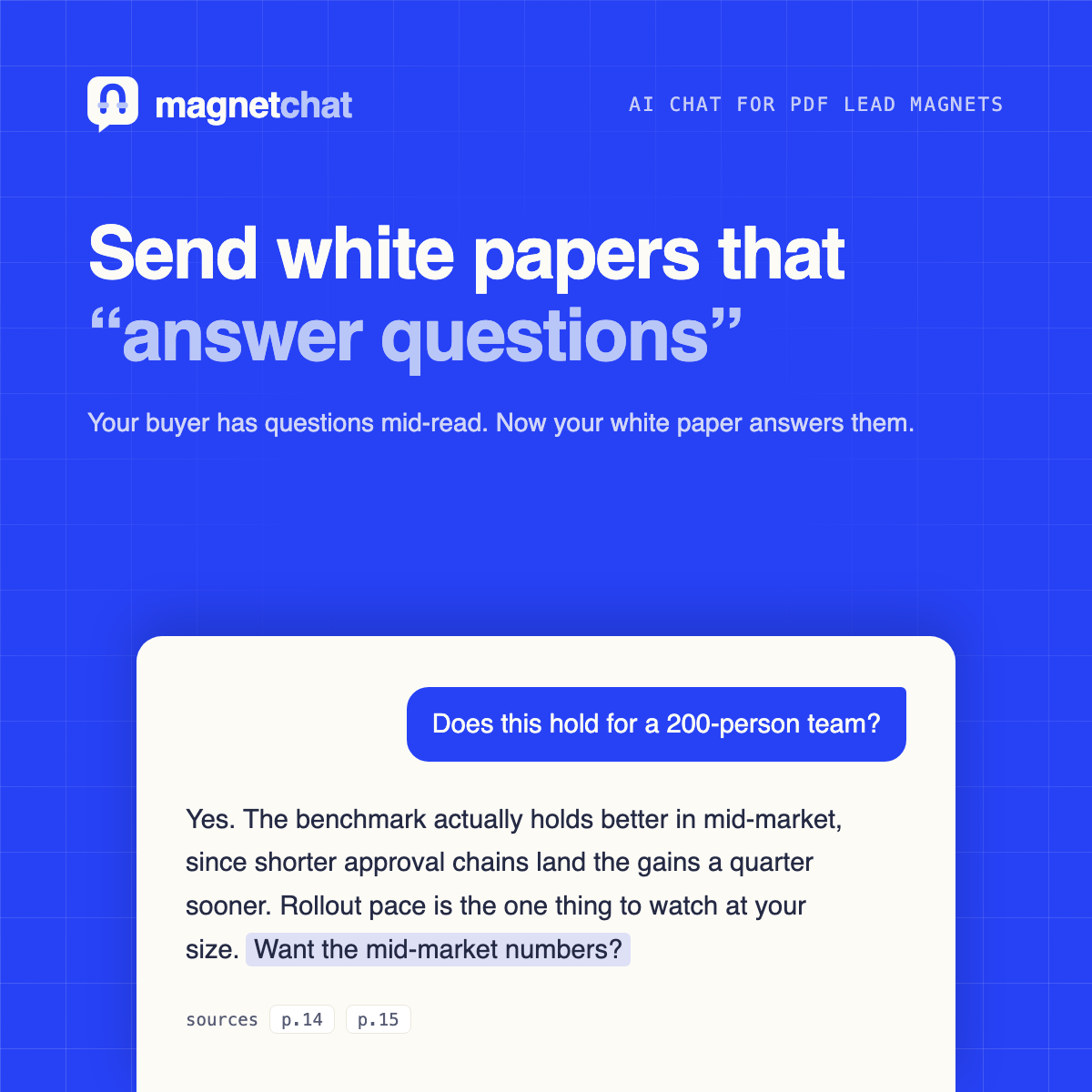
That stretch is the post-download gap, and it is what we built magnetchat to close: chat that lives beside your white paper, answers the reader's questions from its pages, asks a few back, and turns the reading into qualification. Upload the PDF you already run, review the plan, swap the download link. The first magnet is free.
Fix the five patterns above and your cost per download drops. Close the gap after it and the downloads start turning into pipeline.
Common questions
Do question headlines work in LinkedIn ads?
The strongest headlines in the set were questions, and only 6% of advertisers use one. A question makes the scroller answer it in their head, and whoever answers yes has qualified themselves before the click. Make it a question your buyer would actually say yes to.
Should my ad headline say "download the whitepaper"?
No. 12% of unique headlines spend their one line on the word "download", and at least 20 ads run "Download the Whitepaper" as the entire headline. The button already handles the transaction. The headline's job is to say why the document is worth reading.
How do I make an AI white paper stand out?
One in five white paper ads on LinkedIn is already about AI, so the competition is not rival vendors, it is every lookalike promise in the feed. Lead with the claim or number only you can make: your data, your customer's result, your contrarian position.
Who should a white paper ad name?
The buyer. Only 15% of unique headlines say "you" or "your", and only 2% name the role they want to reach. "How CMOs and CTOs Are Preparing for AI" stops exactly the right scroller and lets the wrong ones keep going.
What happens after someone downloads the white paper?
In every funnel behind these 1,176 ads, the same thing: nothing aimed at the reading. The ad drives the download, the PDF talks at the reader, and follow-up fires on the form fill instead of the moment of attention. That is the post-download gap, and closing it is what magnetchat is for.
Get pipeline, not just downloads
Put AI chat beside your PDF lead magnets and qualify leads while they're still reading.